TURI Grants
Grant opportunities
Currently, TURI is accepting academic research grant proposals.
Want to discuss future project ideas or have questions? Contact us today!

Past Grants
Learn about past recipients of TURI Grants and their projects
-
Grants Awarded for 2025
Business and Industry Grants
New Method Plating Co. in Worcester received funding to assist in their efforts to eliminate the use of trichloroethylene (TCE). The grant enabled the company to invest in new equipment and safer chemicals. These new practices will enhance workplace safety and improve the environment. New Method Plating, a family-owned business operating for three generations in Worcester, MA, collaborated with TURI and leveraged TURA financial support to eliminate their use of a carcinogenic cleaning chemical. The TUR solution is estimated to save New Method Plating $57,465/year with a return on investment of just over 2 and a half years. Some of the cost savings and competitive advantages which resulted from implementation include:
- Reduced chemical costs: $335 per year
- Elimination of hazardous waste management: 98% cost reduction, saving $4,700 per year
- Lower worker training and compliance costs: $4,290 per year due to safer chemistry and elimination of control technologies
- Reduced personal protective equipment needs: $175 per year
- Reduced electricity consumption: $38,000/year in savings
- Lower maintenance and repair costs: 80% reduction, saving $3,760 per year
- Reduced labor requirements: $5,460 per year in labor savings
- Improved throughput: enables 2–3 additional cleaning cycles per hour
Community Grants
The Brazilian Women’s Group (BWG) has partnered with TURI to expand the Vida Verde Women’s Cooperative. This initiative supports Brazilian house cleaners by promoting non-toxic, TURI-tested green cleaning alternatives, addressing several different severe health risks—particularly respiratory issues and miscarriages—caused by conventional products. Since 2006, Vida Verde has trained more than 1,000 people to create safer job opportunities for over 300 house cleaners while advocating for environmental and economic justice. The program includes two cohorts of 15 women each and offers culturally tailored, Portuguese-language training across six sessions. Participants receive stipends, mentorship, and practical experience, mastering green cleaning methods, workers’ rights, and financial literacy.
Clean Water Fund (CWF) will use funds to initiate outreach to childcare providers to increase their awareness of PFAS and other toxic chemicals that may be in children’s products. CWF worked with the TURI to test a range of products commonly found in Head Start classrooms, day care facilities, and other pre-school environments. The goal of this testing is to identify whether young children are being exposed to sources of PFAS in the childcare environment—and to encourage and support efforts to reduce PFAS exposure in congregate childcare settings.
The Berkshire Regional Planning Commission (BRPC) has been awarded financial assistance to tackle the pressing issue of plastic pollution. This initiative focuses on addressing the concerns of the 32 municipalities within Berkshire County, fostering a collaborative approach to environmental health. A toolkit has been developed for municipalities wishing to reduce plastic use through by-laws and will be shared with communities throughout the Berkshire region. Another element of the project includes collaboration between the board of health and local food establishments to find opportunities and best practices for reducing single-use plastics in the service industry.
Academic Grants
Worcester Polytechnic Institute (WPI)– will use the grant to help push their AI-driven predictive modeling work forward, accelerating the discovery of non-toxic substitutes for NMP that allow for safer manufacturing pathways for high-performance batteries. WPI researchers are using cutting-edge technology to deliver real-world solutions that improve industry practices to reduce the risk of public exposure to toxic chemicals like NMP.
-
Grants Awarded for 2024
Business and Industry Grants
- Cedars Mediterranean Food of Haverhill is a producer and distributor of a wide range of Mediterranean food products, with a strong focus on hummus. Through the grant, Cedars worked with the TURI laboratory to identify safer cleaning alternatives and necessary equipment to eliminate or reduce toxic chemicals, improve worker health and safety, reduce regulatory obligations, and increase process efficiency or yield. Cedars conducted pilot testing cleaning and sanitizing chemicals on the manufacturing floor through the purchase of drums of chemicals and a few small tanks.
- Silent Spring of Newton is an innovative research organization dedicated to uncovering environmental causes of breast cancer. TURI funded Silent Spring Institute to carry out a project titled “Fluorinated Chemicals in Beauty Products Used by Black Women.” The project goals are to assess fluorine levels in beauty products used by Black women and to evaluate total fluorine levels with respect to marketing language. Silent Spring Institute has partner with the Resilient Sisterhood Project (RSP) to complete the work. Testing has been conducted at facilities at UMass Lowell by purchasing approximately 100 beauty products and delivering them to UMass Lowell for fluorine testing using particle-induced gamma-ray emission (PIGE) spectroscopy.
Academic Research Grants
Professor Ramaswamy Nagarajan of Plastics Engineering at UMass Lowell collaborated with the Toxics Use Reduction Institute and Haartz Corporation to explore and assess safer alternatives to the PFAS-based coatings that are frequently applied to commercial textiles. Haartz Corporation stands out as a global leader in the production of highly engineered and uniquely crafted textile materials. While PFAS coatings are known for their excellent resistance to heat, environmental deterioration, and chemical reactions, this project involved the development and evaluation of innovative biobased materials designed to repel water and oil on acrylic fabrics used in automobiles. Water and oil penetration tests were conducted to assess the effectiveness of these new coatings throughout the project’s duration.
Assistant Professor Peter Bender, Ph.D. of Physics and Applied Physics at UMass Lowell- initiated a project, titled “Using Nuclear Physics Techniques to Detect Per- and Polyfluorinated Substances Signatures at UMass Lowell,” focusing on the growing concern surrounding per- and polyfluoroalkyl substances (PFASs). These chemicals are notable for their environmental persistence and potential toxicity to both ecosystems and human health. Given the vast number and structural variety of PFASs, achieving comprehensive characterization is analytically challenging, often resulting in costly and time-consuming processes.
To address this, several analytical methods can measure the total fluorine content in samples, irrespective of their chemical structure or molecular weight. Among these, Proton Induced Gamma-ray Emission (PIGE) and Instrumental Neutron Activation Analysis (INAA) are two nuclear techniques that can leverage the resources and expertise available at the UMass Lowell Radiation Laboratory. While both methods are capable of detecting fluorine in samples, they each come with their own sets of advantages and limitations. Furthermore, calibration of the counting systems is essential for accurately quantifying the total fluorine content using either technique.
Funding from the grant will support the development of both PIGE and INAA methods at UMass Lowell during the 2024 fiscal year, with testing conducted on samples provided by Silent Spring.
Professor Yuyu Sun and Associate Professor Kwok-Fan Chow from the Chemistry Department of University of Massachusetts Lowell -will work to identify and evaluate safer alternatives to PFAS coatings used for paper-based food packaging. The professors will be assisted by three University of Massachusetts Lowell students. The research team will investigate biobased bilayer hydrophobic and oleophobic coatings. Specifically, the research will focus on a biobased bilayer coating consisting of an alginate layer and a beeswax layer.
-
Grants Awarded for 2023
Research
TURI provided an academic research grant to help Haartz Corporation identify and evaluate safer alternatives to PFAS-based coatings that are commonly used for commercial textile products. The grant was provided to Dr. Ram Nagarajan from the University of Massachusetts Lowell, who was assisted by two UML students from the Plastics Engineering Department. Haartz Corporation is a global leader in highly engineered and uniquely designed textile materials. Water and oil penetration tests of acrylic automobile fabrics coated with novel biobased water and oil-repellent materials were developed and evaluated over the course of this project. This project was extended through another research grant the following year.
-
Grants Awarded for 2022
TURI awarded $137,500 in grants to reduce the use of PFAS in manufacturing and firefighting gear; solvents in manufacturing and furniture refurbishing; and flame retardants in gym pit cubes. TURI awarded grants to:
Industry
Boyd (formerly Lytron) of Woburn manufactures thermal management and liquid cooling products, used by a industrial electronics, medical, military, aerospace, and semiconductor companies. Boyd successfully removed TCE from one of their cleaning processes in their facility in 2018 after working with TURI Lab, thereby reducing costs, improving efficiency, and reducing health risks to employees. With this grant Boyd continued their effort to eliminate their use of TCE by replacing the last remaining solvent cleaning system with a new aqueous system.
Southbridge Sheet Metal Works, Inc. of Sturbridge manufactures sheet metal products including enclosures and large structural frames. Their operations include layout, cutting, forming, milling, welding, painting, assembling, and shipping. The goal for Southbridge was to replace a vapor degreaser, which used 7,000 to 10,000 pounds of methylene chloride, to clean parts prior to painting with a safer, more environmentally friendly solution. The project modified the existing tank to add ultrasonics transducers, and switched to a safer aqueous cleaner.
Vishay Barry of Attleboro manufactures semiconductor packaging and resistive components including terminations, resistors and attenuators. An ISO9001 certified, ITAR registered company, Vishay Barry is an approved supplier to the leading manufacturers of military, commercial, aerospace, medical and fiber-optic devices. Vishay Barry’s goal was to eliminate the use of solvent-based vapor degreasing technology from all onsite manufacturing. As part of this change included purchasing new (to Vishay Barry) aqueous cleaning equipment and water-soluble cleaning chemicals. The equipment will include ultrasonic baths, vacuum drying units and water-based pump parts washers.
Small Businesses
Conklin Office Furniture of Holyoke is a small business focused on providing sustainable office furnishings by recycling and refurbishing used office furniture. They received a 2022 TURI Small Business Grant to examine their use of products that contain toxic solvents as part of their ongoing work to implement an environmental management system. The project is focused on finding safer options for their use of spray adhesives and paint/stain cleaners and thinners, which traditionally contain methylene chloride and toluene, respectively. The TURI team was joined by OTA staff to help Conklin discover opportunities for toxics use reduction.
Donoma Gymnastics of Stow provides gymnastics classes (and hosts a competitive gymnastics team), open play for families and children, birthday parties and full- and half-day camps at its facility. This project is focused on replacing up to 10,000 foam gym pit cubes that contain flame retardants with cubes without flame retardants, to make their gym a safer space for children and their families.
Academic Researchers
Professor Ramaswamy Nagarajan, Department of Plastics Engineering at UMass Lowell continues his research with Transene Company of Danvers to research safer chemicals to replace per- and poly-fluoroalkyl substances (PFAS) surfactants used in etching solutions for semiconductor manufacturing. The research team will study the compatibility, stability, and performance of safer non-PFAS alternative surfactants. The research team intends to expand on the success of this project by working with another Massachusetts facility currently using PFAS for other product applications.
Associate Professor Hsi-Wu Wong, Department of Chemical Engineering at UMass Lowell Lowell identified and evaluated safer, effective solvents in collaboration with Johnson Matthey, a manufacturer of active pharmaceutical ingredients and intermediates at its facilities in North Andover and Devens. The safer alternatives could replace methylene chloride, a toxic chemical used in the company’s manufacturing processes. This project is a continuation of the previous research using thin layer chromatography conducted by Assistant Professor Grace Chen of the Plastics Engineering Department. The goal of this year’s research is to further evaluate the effectiveness of the identified safer alternative solvent blends for column chromatography and scale up from lab to commercial production levels.
Community Groups
The Professional Firefighters of Massachusetts (PFFM) District 8 Vice President Jason Burns of Fall River and Deputy Chief Sean Mitchell of Nantucket, in collaboration with the Nantucket PFAS Action Group and Courtney Carignan, lead investigator at Michigan State University, are continuing their work to replace firefighter gear containing PFAS, study the impacts of this replacement, and educate firefighters on PFAS and safer alternatives. PFAS, which is used in firefighting protective gear to repel oil and water, can shed from the gear, leading to human and environmental exposure. The project team will share information with firefighters, fire marshals, unions, and cancer prevention groups in Massachusetts by creating fact sheets and providing targeted training.
-
Grants Awarded for 2021
TURI awarded $177,500 in grants to reduce the use of PFAS in manufacturing, firefighting gear and consumer products; solvents in manufacturing, auto shops and dry cleaning; and toxics in personal care products. TURI awarded the grants to:
Industry
Central Metal Finishing Inc. of North Andover, purchased new cleaning equipment to eliminate the use of n-propyl bromide, a hazardous chemical that can affect the central nervous and reproductive systems. Working with the TURI Lab, Central Metal Finishing identified a safer alternative that works with their new equipment. The company’s goals are to protect worker health and safety and increase production capacity for its aerospace and medical device customers.
S.E. Shires of Holliston, a maker of custom brass musical instruments, purchased an aqueous ultrasonic cleaning machine for a new line of larger instruments. In 2018, the Massachusetts Office of Technical Assistance helped S.E. Shires eliminate the use of trichloroethylene (TCE), a toxic solvent that was used to clean the instruments. To continue using a water-based cleaning solution and not revert back to using TCE, S.E. Shires worked with the TURI Lab to identify aqueous products that effectively remove debris and oils from brass surfaces.
Small Businesses
Rindge School of Technical Arts of Cambridge, created a safer environment for students who learn and work in the automotive technology program by replacing solvents with bio-based parts washing systems. These safer products replaced aerosol brake and parts cleaners that contain solvents such as toluene, methanol, acetone and perchloroethylene (perc). The automotive technology program staff also replaced lead wheel weights, which are physically handled by students on a daily basis, with non-lead weights.
North Randolph Cleaners converted its dry cleaning shop from using perc, a likely human carcinogen, to Professional Wet Cleaning. This safer alternative allows the small business to clean “dry-clean-only” clothes with water and detergents in computer-controlled machines. Workers then use special tensioning and pressing equipment to achieve high-quality results. North Randolph Cleaners expects to eliminate the use of 200 gallons of perc annually, improve worker health and safety and market the shop as environmentally friendly.
Academic Researchers
Associate Professor Hsi-Wu Wong, Department of Chemical Engineering at UMass Lowell identified safer, effective solvents in collaboration with Johnson Matthey, a manufacturer of active pharmaceutical ingredients and intermediates at its facilities in North Andover and Devens. The safer alternatives could replace methylene chloride, a toxic chemical used in the company’s manufacturing processes. This project was a continuation of the previous year’s research conducted by Assistant Professor Grace Chen of Plastics Engineering. The goal of this year’s research was to further evaluate the effectiveness of the identified safer alternative solvent blends.
Professor Ramaswamy Nagarajan, Department of Plastics Engineering at UMass Lowell worked with Transene Company of Danvers to research safer chemicals, to replace per- and poly-fluoroalkyl substances (PFAS) surfactants used in electronic processing chemicals. The research team studied the compatibility and stability of pectin-based bio-surfactants in etching solutions. This work helped Transene convert more than 90% of its client base to PFAS-free products and provides useful results for other industries that use PFAS surfactants in manufacturingCommunity Groups.
Community Organizations
Community Action Works and Clean Water Fund of Boston, provided workshops and resources to community members about PFAS contamination in drinking water and other sources. These chemicals have been linked to health effects such as cancer, liver damage, decreased fertility, asthma and thyroid disease. The project team provided community members with information about health and environmental concerns, safer alternatives and practical steps to reduce the use of, and exposure to, PFAS.
Nantucket PFAS Action Group worked with firefighters to replace firefighter gear containing PFAS, study the impacts of this replacement and educate firefighters about PFAS and safer alternatives. PFAS, which is used in firefighting protective gear to repel oil and water, can shed from the gear, leading to human and environmental exposures. Working with the Nantucket and Fall River Fire Departments, the project team shared information with firefighters, fire marshals, unions and cancer prevention groups in Massachusetts. The team created fact sheets, hosted a webinar and used social media to share information on PFAS and safer alternatives.
Silent Spring Institute of Newton and Resilient Sisterhood Project of Boston used social media to share information about toxic chemicals in personal care products marketed to Black women. These chemicals – including phthalates, parabens, phenols and antimicrobials – are associated with a broad range of health effects, including endocrine disruption, asthma and cancer. Based on in-depth research about how women seek information on personal care products, the team worked with influencers to share information about safer alternatives on social media.
-
Grants Awarded for 2020
TURI awarded nine grant projects aimed to reduce the use of hazardous solvents, harmful cleaning and disinfection agents and pesticides.
Safer Solvents for Manufacturers and Dry Cleaners
Assistant Professor Wan-Ting (Grace) Chen of Plastics Engineering at UMass Lowell is partnering with Johnson Matthey, a manufacturer of active pharmaceutical ingredients and intermediates with facilities located in North Andover and Devens. The goal of the research project is to find safer alternatives to methylene chloride, a toxic chemical used in reaction and purification processes. The researchers plan to identify safer alternative solvents, screen the alternatives for health and safety considerations and test the performance of selected solvents.
Steel Art Company, Inc. of Norwood, a designer and manufacturer of architectural-quality signage, is working with the TURI Lab to find a safer substitute to n-propyl bromide, a higher hazard substance that’s used to clean aluminum, stainless steel and brass parts. Once the TURI Lab evaluates the effectiveness of safer options, Steel Art will select their preferred chemistry and purchase compatible equipment, which may include ultrasonic or low agitation systems.
Grove Hall Cleaners of Dorchester aims to eliminate the use of perchloroethylene, a solvent classified as a probable human carcinogen by the International Agency for Research on Cancer. The dry cleaner will switch to Professional Wet Cleaning, which allows for “dry-clean-only” clothes to be effectively washed with water and detergents in computer-controlled machines and finished with tensioning and pressing equipment.
Safer Cleaning and Disinfection
Family Martial Arts Center of Leominster and Fitchburg is re-opening their karate studios using safer cleaning and disinfecting products during the pandemic. The small business is purchasing three steam vapor units to clean and disinfect a 6,500 square foot space and electrolyzed water systems to disinfect the front door, bathroom and front desk areas. By using this new equipment, the facility will eliminate the use of bleach and quaternary ammonium compounds-based disinfectants, both of which can cause respiratory and other health issues.
The Clean Water Fund located in Boston is training house cleaners, custodians, teachers and members of environmental justice communities about how to choose safer cleaning and disinfecting products amid the coronavirus. Through workshops, online trainings and social media, the project team will share information about hazardous chemicals in cleaners and disinfectants that are linked to asthma, respiratory irritation and other health impacts. The grant partners – MassCOSH, the Resilient Sisterhood Project, Vida Verde Women’s Co-op of the Brazilian Women’s Group, and the American Federation of Teachers/Massachusetts Chapter – will host workshops to protect vulnerable groups from harmful exposure to toxics in cleaners and disinfectants.
The Brazilian Women’s Group of Brighton is training Brazilian domestic workers and other Portuguese-speaking women about how to make and use safer cleaning products. The project team will also share information about how to minimize coronavirus impacts in their local community, where 75 percent of Brazilian women work as domestic or essential workers. They will also reach out to nannies, elder care workers and childcare providers.
Informed Green Solutions of Deerfield is developing and sharing information with schools about how the coronavirus spreads and the appropriate ways to choose and use safer cleaning and disinfecting products. By learning how to integrate effective control systems into operational systems, schools will minimize the need for expensive janitorial services that use hazardous products. A handbook and other training materials will be shared via webinars and websites.
Silent Spring Institute of Newton is sharing information with Black women about how to select personal care and cleaning products that don’t contain toxics, such as phthalates, parabens, phenols and antimicrobials. Studies show that women of color have higher total amount of toxic chemicals in their bodies compared to white women. Led by the Silent Spring Institute in partnership with the Resilient Sisterhood Project, the project aims to identify and reduce chemical exposures that may contribute to endocrine disruption, asthma, diabetes, and cancer, diseases that put Black women at an increased risk of severe illness from COVID-19. The project team will host virtual workshops, survey women about product usage using an online application and launch a social media campaign about safer alternatives.
Food Systems and Processing
Wellspring Harvest Corporation of Springfield, an urban hydroponic greenhouse that grows lettuce, tomatoes and cucumbers, is eliminating the use of pesticides by closely managing humidity levels to control the growth of powdery mildew infestations on crops. The small business is installing a misting system to ensure that relative humidity does not drop below 50 percent. The extremely fine mist evaporates without wetting plants, thus preventing conditions for mildew growth while raising humidity to prevent spores from spreading.
-
Grants Awarded for 2019
TURI funded the following project teams in September 2019 (FY20):
Industry Grantees
Bird Precision of Waltham, a precision orifices and glass jewel manufacturing plant, is eliminating the use of trichloroethylene (TCE), a solvent listed as a Higher Hazard Substance in Massachusetts. The company is purchasing new drying equipment and working with the TURI lab to refine a new cleaning process.
CD Aero of New Bedford, a leading manufacturer of film capacitors for industrial, medical and specialty applications, is replacing a vapor degreaser that uses n-propyl bromide (nPB). The company will work with the TURI lab to verify safer and effective cleaning solutions to use in the new equipment. nPB is listed as a TURA Higher Hazard Substance and is “reasonably anticipated to be a human carcinogen” by the National Toxicology Program.
MSI Transducers Corp. of Littleton, a designer and manufacturer of acoustic transducers for commercial and defense applications, is modifying their injection tooling process to reduce the use of lead and lead waste. The new configuration of the tool is also expected to improve yield and efficiency.
Plenus Group Inc. of Lowell is working with UMass Lowell Professor Boce Zhang’s lab to research and evaluate alternatives to sodium hydroxide, a corrosive chemical that can cause irritation to the eyes and skin. If a complete substitution is identified, over 14,000 pounds of sodium hydroxide could be reduced, resulting in improved worker safety and significant cost savings.
River Street Metal Finishing of Braintree, a provider of precision metal finishing, is reducing the use of sulfuric acid, a corrosive toxic chemical that causes direct effects ranging from irritation to burns on the skin, eyes, and respiratory tract. The company will purchase a filtration system for three aluminum anodizing process tanks, which will filter the sulfuric acid and allow it to be reused.
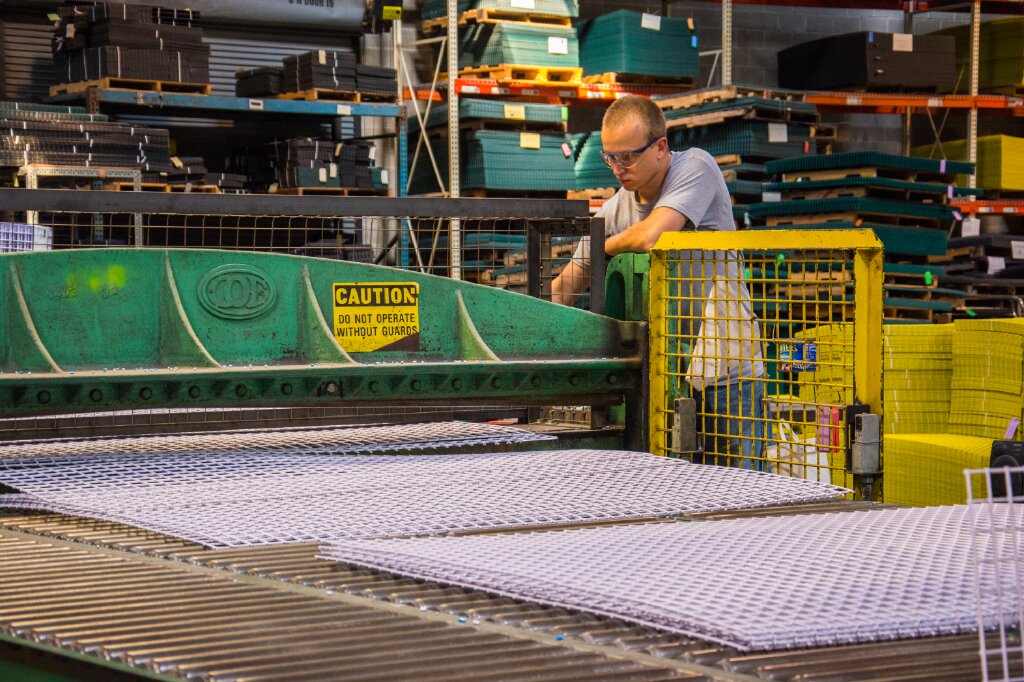
Riverdale Mills of Northbridge, a manufacturer of welded wire mesh fabrics, is purchasing equipment to reduce the use of toxic chemicals in their manufacturing process by reducing hydrochloric acid drag-out from a pickling tank. Installing this equipment will reduce the use of hydrochloric acid, sodium hydroxide, and ammonium hydroxide.
Small Business Grantees
Outstanding Bath Refinishing of Milford is purchasing equipment and an alternative paint stripper that does not contain methylene chloride, a toxic chemical that is banned in paint stripping products for consumer use as of November 2019. The company will purchase an air‑operated drum pump and methylene chloride-free paint strippers for testing.
Workshop Auto of Lowell is installing an engine and parts washer that will reduce the use of solvents such as acetone, methanol, and toluene, toxic chemicals that can cause serious acute and chronic health effects. The business will work with an equipment company and the TURI lab to identify a safer aqueous alternative to use in the machine.
Academic Research Grantees
Assistant Professor Wan-Ting (Grace) Chen of the Department Plastics Engineering at UMass Lowell is partnering with Raytheon Company to find a safer alternative for methylene chloride, a toxic chemical used to remove chemical agent resistant and conformal coatings. The team will identify alternative solvents and test their performance.
Professor Ramaswamy Nagarajan of the Department of Plastics Engineering at UMass Lowell is partnering with Bradford Industries in Lowell to find and evaluate safer solvent blends to replace the use of the toxic solvent dimethyl formamide (DMF), a chemical designated as a TURA Higher Hazard Substance. During the last two years, the research team identified safer alternatives with performance comparable to DMF for a new product application. This year, the team will evaluate coating quality and explore solvent combinations for three of Bradford’s current products.
Assistant Professor Hsi-Wu Wong of the Department of Chemical Engineering at UMass Lowell is continuing to collaborate with Waters Corporation in Milford to identify and test the performance of safer solvents to replace the toxic chemical acetonitrile used in liquid chromatography applications. In this phase, the team will test safer solvents for mass spectrometry detection of dye, food, and environmental compounds.
Community Grantees
Clean Water Fund of Boston is sharing information with Massachusetts residents about the prevalence of toxic flame retardants and polyfluoroalkyl substances (PFAS) in everyday products and communities. PFAS has been linked to kidney cancer, low infant birth weight, and a range of other diseases. The project team will conduct workshops, write articles and brochures, and share information in public forums and with members of the Clean Water Fund and the Alliance for a Healthy Tomorrow network. Clean Water Fund’s communications will include information on safer alternatives.
Don’t Take That Receipt! of Holyoke, a public health and environmental justice group of youth and adults, is building upon a previous project that provided information about BPA in cash register receipts and safer alternatives. The project will provide information about BPA in a wide variety of other thermal papers, including sticky labels and tickets used in fast food, shipping, delis, pill bottles and medical test labels. The project team will visit businesses to provide information about shifting to phenol-free thermal papers, create a video about the risks of thermal paper, and share practical tips for reducing exposure.
-
Grants Awarded for 2018
TURI funded the following 14 project teams in September, 2018 (FY19):
Industry Grantees
Kettle Cuisine of Lynn, a maker of small batch, all natural soups for restaurants, foodservice operators and grocery retailers, was awarded a second-year TURI grant to continue its work with UMass Lowell’s Food Safety Lab to reduce the use of sodium hydroxide. The toxic chemical, which is used to clean the food processing tanks, is corrosive to the eyes, skin and the respiratory tract. The first year of the grant determined how the facility could optimize their use of the cleaning chemical, thereby reducing volume, and identified potential alternatives. The second year of funding will support UMass Lowell students testing the safer alternatives in the field to determine effectiveness.
Morgan Advanced Ceramics of New Bedford, a manufacturer of ceramic feedthroughs for medical and aerospace industries, aims to eliminate the use of TCE used in a vapor degreaser. The company will purchase a water-based cleaning system that’s expected to eliminate 3,300 lbs. of TCE use per year. By not using TCE, the company expects to save $10,000 per year, improve worker health and safety and reduce regulatory obligations.
MSI Transducers Corp. of Littleton, a designer and manufacturer of acoustic transducers used for a variety of commercial and defense applications, expects to significantly increase production within the next five years. In anticipation of this growth, the company aims to reduce its use of lead and lead waste generated in the manufacturing process by re-engineering two injection molding tools.
Small Business Grantees
Auto Repair Shop at Assabet Valley Technical High School of Marlboro will replace toxics that are currently used to clean vehicle parts. The project team will purchase bio-based part washing systems that will reduce chemical exposures for high school students and their instructors and teach them environmentally friendly practices. The project team estimates that they will reduce the use of perchloroethylene and other solvents by 92 gallons per year and will save over $3,000 annually.
Dory Cleaners of Swampscott will convert their dry cleaning shops from using perchloroethylene (perc), a known human carcinogen listed as a Higher Hazard Substance in Massachusetts, to professional wet cleaning technology. This safer alternative allows the small businesses to clean “dry-clean-only” clothes with water and detergents in computer-controlled machines. Workers then use tensioning and pressing equipment to achieve high-quality results.
Absolute Gymnastics of Tyngsboro, All Around Gymnastics of Plainville, Black & Gold Gymnastics of Middleton, Gymnastic Academy of Boston-Norwood, and Kaleidoscope of Dance and Gymnastics of Wareham replaced foam pit cubes containing flame retardants with cubes not containing flame retardants. Flame retardants are endocrine disruptors and can affect hormonal development.
Academic Research Grantees
Prof. Ram Nagarajan of the Department of Plastics Engineering is partnering with Bradford Industries of Lowell for a second year to find and evaluate safer solvent blends to replace the use of the toxic solvent dimethylformamide (DMF) in textile coatings. In phase one, the research team identified combinations of safer and effective solvents that dissolve the target polymer used by the company. The goal of the second phase is to vary the relative ratios of solvents in the mixtures to meet the company’s performance and cost requirements.
Assistant Prof. James Reuther of the Chemistry Department aims to find a safer and more effective nail polish remover for methacrylate-based gel nail polish. Gel nails are popular with customers due to a harder surface that reduces chipping and extends nail polish life. However, the removal of the polish requires application of acetone remover for up to 15 minutes. Acetone can cause serious eye irritation, drowsiness and dizziness; and chronic exposure to acetone-based nail removers may damage the central nervous system and renal system.
Assistant Prof. Hsi-Wu Wong of the Department of Chemical Engineering is partnering for a second year with Waters Corporation, an analytical laboratory instrument and software company located in Milford. The project team will continue identifying and testing the performance of safer solvents used in liquid chromatography equipment. The new formulations will replace the harmful solvents currently in use including methanol, acetonitrile and tetrahydrofuran.
Community Grantees
Don’t Take That Receipt! of Haydenville, a public health and environmental justice group of youth and adults, will build upon a previously TURI-funded project that included the creation of an educational video about exposure to Bisphenol-A (BPA) and Bisphenol-S (BPS) from store receipts. View the video at www.bpa-free.me. This next phase of the project includes communicating the dangers of BPA and BPS through personal exchanges and social media. The team will reach out to stores in and around the low-income community of Holyoke and other towns in Western Mass., focusing on retailers, workers and consumers.
The Field Fund, Inc. works to preserve and maintain Martha’s Vineyard’s grass playing fields using an organic, systems-based approach. The project team aims to share their success with other communities who are evaluating whether to invest in natural grass or plastic playing fields. The team will create a video, build a website and develop brochures and fact sheets that show that when thoughtfully maintained, natural grass is a durable, safe, economical playing surface that is also beneficial to children and the environment.
Lawrence Fire Department will integrate toxics use reduction awareness into their fire safety visits to all 103 auto body and car repair shops in the city. During the visits, the Fire Prevention team will conduct an initial safety assessment, provide owners with a list of safety concerns to work on and encourage owners to use safer products. Products that contain toxic chemicals include wheel washes, spray gun washers, brake cleaners, degreasers and lead wheel weights. During a later visit, fire prevention officials will evaluate whether the shops switched to safer alternatives. They will continue inspections on an annual basis, encouraging toxics use reduction and safer product trials.
Worcester Public Schools will work to make school buildings safer for students, teachers and tradesmen. The project team will identify safer alternatives that tradesmen use to maintain the buildings. Products that contain toxics include adhesive removers, caulking, lubricants, rust removers, boiler additives and more. The project team is also identifying safer products used to maintain the busses such as degreasers, lubricants, oils and coolants. They will share the information with facility managers and vocational teachers across the state.
-
Grants Awarded for 2017
TURI funded the following 15 project teams in FY18:
Industry Grantees
Kettle Cuisine of Lynn, a handcrafter of small batch, all natural soups for restaurants, foodservice operators and grocery retailers, aims to reduce the use of sodium hydroxide used for cleaning. The company is working with the UMass Lowell Food Safety Lab to find safer cleaning and sanitizing formulations or methods that are less hazardous than sodium hydroxide. If a safer substitute that works is found, the company could reduce the use of sodium hydroxide by 45,000 pounds per year.
OFS of Sturbridge, a manufacturer of fiber optic solutions, is investigating integral recycling of hydrogen fluoride, a highly toxic chemical that is used for etching glass. The company aims to minimize worker exposure by implementing a closed-loop recycling process to reuse hydrogen fluoride, thereby reducing the handling and waste of the toxic chemical. Integral recycling also improves efficiency by maintaining a consistent acid etch rate and reducing production down time for bath recharging.
US Pack, Inc. of Leominster, a leading contract manufacturer of custom liquid specialty products, invested in capital equipment that will make clean up more efficient and produce more precise production batches. The 10-head pressure gravity filler will reduce the use of a variety of chemicals including acetone, ethylene glycol and methanol used in manufacturing automotive, industrial and household cleaning products. By upgrading its equipment, the company could reduce the use of toxic chemicals by over 19,000 pounds per year.
Lytron of Woburn, a designer and manufacturer of cold plates, chassis, chillers, cooling systems and heat exchangers, is aiming to phase out trichloroethylene (TCE) from their cleaning process. The company is working with the TURI Lab to identify safer chemistries. Phase I research involves identifying a solvent that can work in a vacuum degreaser to remove lubricating oils from aluminum flat and fin parts. Phase II aims to identify an aqueous cleaner that can remove copper tube lubricants from copper brazed parts. By removing TCE from their cleaning process, the company will reduce health risks to employees and improve efficiency.
Academic Research Grantees
Prof. Ram Nagarajan of the Department of Plastics Engineering is partnering with Bradford Industries of Lowell to find and evaluate safer solvent blends to replace the use of the toxic solvent dimethylformamide (DMF). Using the Hansen Solubility Parameters in Practice (HSPiP) software tool, Prof. Nagarajan will narrow down possible alternatives that will meet Bradford’s performance requirements for its textile coating applications.
Profs. Jayant Kumar of the Department of Physics and Ram Nagarajan of the Department of Plastics Engineering will partner with Mexichem Specialty Compounds of Leominster, the largest supplier of PVC-based cable and wire products in Massachusetts. The research team will develop safer alternatives to antimony trioxide, a widely-used flame retardant that’s listed as a probable carcinogen by IARC. This research leverages UMass Lowell’s expertise in safer flame retardants to reduce, and eventually eliminate, the use of toxic flame retardants in wire and cable product lines in Massachusetts.
Assistant Prof. Hsi-Wu Wong of the Department of Chemical Engineering will partner with Waters Corporation of Milford to identify safer solvents used in liquid chromatography equipment that identifies and quantifies chemical compounds in complex mixtures. The final solvent formulations will replace the harmful solvents currently in use including methanol, acetonitrile and tetrahydrofuran.
Assistant Prof. Christopher Hansen of the Department of Mechanical Engineering will identify and investigate replacements for chlorinated solvents used in industrial applications. The research team will identify alternatives using an extensive database of solvents based on technical criteria and then verify the predicted performance at a lab-scale.
Small Business Grantees
Auto Collision Shop at Assabet Valley Technical High School of Marlboro purchased new equipment and water- based gun washing solution that will eliminate the use of hazardous solvents. Other auto body shops have proven that a water-based alternative is effective and less expensive. Instead of disposing used solvent as hazardous waste, the school can filter and reuse the water-based solution for many years. Students will benefit from a healthier work environment while learning about environmentally-friendly practices to take with them into their work places after they graduate.
Walker’s Gymnastics and Dance of Lowell purchased and installed new foam cubes that do not contain flame retardants for two landing pits used in the gym. While the landing pits provide safe cushioned landing spots as gymnasts train on the equipment, standard foam cubes contain hazardous flame retardant chemicals that can cause health effects such as endocrine disruption, which is of significant concern to young children.
Becks Printing of North Adams purchased an embroidery machine, eliminating the need for a screen printing machine which would have required extensive chemical use for inks and cleaning solutions.
Community Grantees
The Field Fund, Inc. of Martha’s Vineyard is working to preserve and maintain Martha’s Vineyard’s playing fields using an organic, systems-based approach rather than installing synthetic fields. By not installing synthetic fields, the Island community aims to preserve its natural landscapes, protect ponds, fragile habitats and single source aquifer, as well as protect young athletes from toxic exposures. To improve maintenance on natural grass playing fields, The Field Fund is purchasing an aerator. This is part of a larger effort to eliminate the use of synthetic fertilizers, pesticides and herbicides and develop an organic management plan for playing fields on Martha’s Vineyard.
Silent Spring Institute of Newton partnered with the Massachusetts Breast Cancer Coalition to reduce high school students’ exposures to common carcinogens and endocrine-disrupting chemicals. The project team visited 12 high school science classrooms to help students identify common toxic chemical exposures in their homes and adopt strategies that reduce these exposures. The team accomplished this through hands-on curriculum and Silent Spring’s free mobile app Detox Me that guides users through more than 270 research-based recommendations for reducing exposures to common indoor pollutants. Students also participated in a peer-to-peer mentoring program that connects them to youth who have participated in studies that measure chemical levels in the body.
Town of Williamstown residents approved a non-binding resolution in May 2017 declaring the town a pollinator-friendly community. The resolution seeks to change residential and institutional landscaping practices by promoting ways to reduce the use of pesticides and herbicides that scientists believe are harming bee populations. The project team hosted training programs for landscape professionals and home owners, conducted tours of pollinator-friendly gardens and worked with local partners on educational opportunities for adults and children.
Worcester Public Schools is undertaking a significant new initiative to minimize the use of products containing asthmagens and hazardous chemicals in school buses and kitchens. The goal is to prevent transmission of pathogens, while maintaining a healthy environment for students and staff. The project team converted school bus and kitchen sanitation practices and products to systems that are safer for human health and the environment. Working with manufacturers, the project team piloted and evaluated safer cleaning and disinfection products, equipment and work practices for use on farm-to-table fresh produce and meats, kitchen surfaces and equipment and school buses.

