A Journey Through Environmental Health and Safer Practices
Written By Alicia McCarthy, Senior Safer Chemistry Scientist
 What inspired you to pursue a career in environmental science, chemistry and public health?
My inspiration for pursuing environmental health, chemistry, and public health comes from understanding how interconnected they are. Early in my career, I realized I deeply value prevention and addressing issues before they happen, which made these fields a natural fit, especially when it comes to hazardous chemicals that affect people and the environment. I have always felt it is important to look beyond the end user and consider the broader impacts of how products are made and used. This perspective helps me see the full life cycle of where products come from, how they are used, and where they end up. It guides how I identify where change can happen and how I collaborate with others to make it. I wanted a career that helps people, feeds my curiosity and love of problem solving, and lets me share that passion to make a difference with the public and next generation.
- What services does the lab offer to businesses?
The TURI laboratory provides free technical assistance to Massachusetts businesses, including manufacturers, to help identify, evaluate, and adopt safer alternatives that fit their specific processes. We go on site to observe how chemicals of concern are used, talk with workers directly, and consider operational needs. Engaging workers is essential because it gives them a voice in the decision making process and helps ensure the safer option works for their setting.
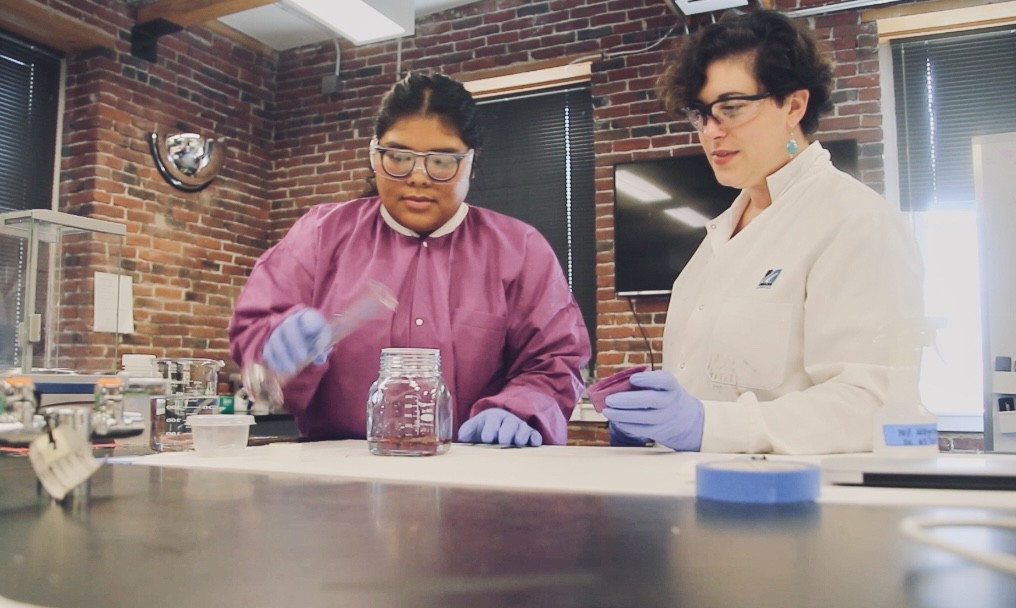
For formulators and device manufacturers, we offer fee for service performance testing that meets ecolabel requirements from programs like EPA Safer Choice, Green Seal, and Ecologo, as well as private label requirements such as Whole Foods or general marketing claims. Our biosafety level two microbial lab provides affordable proof of concept testing for antimicrobial formulations, devices, textiles, coatings, and films. We are also working toward supporting EPA registration testing for sanitizers and disinfectants by 2026 or 2027. Funds from these tests help support laboratory equipment purchases and provide opportunities for UMass Lowell students to gain hands on experience with manufacturing techniques, product applications, and different industries while working in our lab.
TURI also offers annual business grants to help companies purchase equipment or products needed to make the switch to safer alternatives. Combining hands on technical assistance with targeted funding has proven to be an effective way to support adoption and sustain change over time.
- How do you ensure that the alternatives you find are not only safer but also effective in cleaning and disinfecting?
When we look for safer alternatives, we start with our publicly available hazard assessment tool, the Pollution Prevention Options Analysis System, or P2OASys. This tool lets us screen and evaluates data across eight categories, including human health effects, ecological hazards, environmental fate and transport, atmospheric hazards, physical properties, process factors, and life cycle impacts.
TURI staff often work with vendors that businesses already use so that we can streamline the process and help businesses quickly identify safer products with recognized ecolabels like EPA Safer Choice, EPA Design for the Environment (DfE), and Green Seal. These labels are strong starting points because they align on chemicals of concern and require verified performance testing.
We also conduct in house performance testing to match products with the contaminants or organisms of concern and to evaluate active ingredients under realistic contact times and beyond just using ATP meters as a measurement of cleanliness efficacy. This ensures we are not relying on vendor claims alone. We use scientific methods and process information to help businesses choose safer and more affordable products that meet their needs and reduce the use of toxic chemicals.
- What are the most important factors when it comes to safer cleaning, sanitizing, and disinfecting product practices?
The biggest takeaway is to clean first, disinfect only when necessary, on high touch areas, and choose products with safer ingredients and active ingredients that fit the setting. Consumers and businesses should look to trusted ecolabels I mentioned. These certifications help cut through marketing claims and point to products evaluated for both human and environmental health and safety.
Safer and effective alternatives are available. Steam and dry steam devices are a great option to consider since they can clean, sanitize, and or disinfect depending on temperature and contact time, and can lower costs on buying multiple products since they only use water and electricity.
For manufacturers of these products, this is the time to prioritize safer chemical design. The EPA Safer Chemical Ingredients List is a strong starting point, with actives like citric acid, lactic acid, hydrogen peroxide, ethanol, isopropanol, and chitosan that have well established performance data. It is also important to make safer products accessible to communities most affected by chemical exposures, including workplaces, schools, and public spaces.
- Can you share any success stories involving partnerships or collaborations?
We are partnering with the Brazilian Women’s Group, which received a TURI grant to train Brazilian immigrant domestic cleaners on how to make their own cleaners using simpler and safer ingredients. The goal is to help reduce chemical exposures and costs while giving them practical tools they can use in their work.
Our lab tested and reformulated their cleaner recipes, so they are safer to use and still perform as well as many commercial products. One of the most meaningful parts of this project was creating Portuguese language training materials, since there are very few accessible resources for domestic cleaning professionals who may not speak English fluently.
This work not only empowers these workers directly but also provides resources that can be shared with other businesses across Massachusetts and beyond. It has also opened up more conversations about when to clean, sanitize, or disinfect and how to choose safer active ingredients. This project is a strong example of how community partnerships can make practical, safer solutions more accessible.
- Looking ahead, what are your hopes for the future of cleaning and disinfecting products in terms of safety and environmental impact?
I think my hope is that more manufacturers begin to move away from chemicals of concern, especially quaternary ammonium compounds, both as surfactants in cleaners and as active ingredients in sanitizers and disinfectants. I would love to see registration process for safer active ingredients become more affordable so manufacturers can innovate and bring a wider variety of options to market. This would help reduce the risk of tolerance, lower chemical exposures to known and emerging chemicals of concern and encourage the broader adoption of safer ingredients.
I would also like to see “2 in 1” cleaner disinfecting products phased out. These products are often misused or overused, which can reduce their effectiveness and increase unnecessary exposure. Having clearer product functions can support better use practices and lead to safer and more consistent applications.
I also want to see more manufacturers bring safer ecolabel certified products into everyday retail spaces, especially in dollar and general stores. Making safer options more accessible would help reduce the disproportionate impact on environmental justice (EJ) communities that face higher levels of exposure and have less access to affordable safer alternatives. Everyone deserves access to products that protect health and the environment, not just those who can afford specialty brands.
- What is the most rewarding aspect of your work in this field?
The most rewarding part of my work is getting to meet and work with so many different people from a wide range of industries, communities, and backgrounds. I love taking things case by case to fully understand the specific needs of the people and organizations we are supporting. That is a key part of identifying safer alternatives that are realistic, effective, and sustainable.
I also find it deeply rewarding to provide resources that help people feel informed and empowered to be part of the change. Seeing companies and communities adopt safer products and maintain those changes over time is meaningful, and those individual actions build momentum that leads to broader impact.
I love that TURI is solution focused rather than only highlighting risks and hazards. I get to contribute to work that shows a future where safer options are accessible and practical without having to focus on banning specific chemicals of concern. Even though the work often happens with one company or community at a time, it adds up. Every case study and story becomes part of something bigger, showing how collective action can reduce toxic chemicals, create safer environments, and support business growth and competitiveness.

