UMass Lowell Research Teams Awarded TURI Grants to Advance Safer Industrial Chemistries
Contact: Katie Daly, Communications Manager [email protected]
LOWELL, Mass. — Two research teams at the University of Massachusetts Lowell have been awarded FY27 Academic Research Program grants from the Toxics Use Reduction Institute (TURI) to develop safer alternatives for critical industrial processes. Led by faculty from the Departments of Chemistry and Plastics Engineering, these projects aim to reduce the use of toxic chemicals in the life sciences and textile industries while maintaining performance and commercial viability.
The grants support research that aligns with the Toxics Use Reduction Institute (TURI) priorities, focusing on replacing high-hazard substances with safer, more sustainable alternatives.
“These projects represent TURI’s ongoing commitment to sustainable innovation and its role in helping Massachusetts industries transition toward safer, more environmentally responsible chemical practices,” said David Turcotte, Interim Director of TURI. “We look forward to partnering with the research teams to find solutions to these chemicals of concern.”
Reducing Toxic Solvents in Peptide Manufacturing
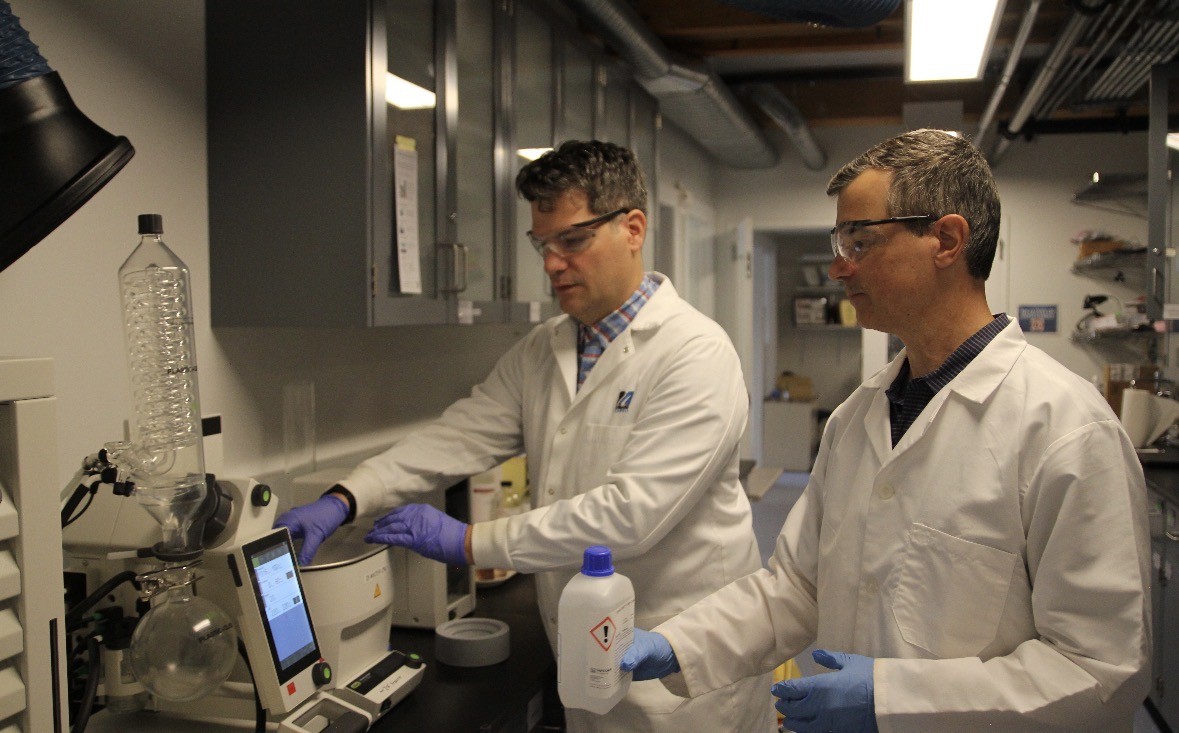
Principal Investigator Michael Ross (Department of Chemistry) has been awarded $34,512 to address the environmental and health impacts of solvent use in peptide synthesis and purification. The project, titled “Reducing Toxic Solvent Use in Solid Phase Peptide Synthesis and Chromatographic Purification,” seeks to identify safer alternatives to hazardous solvents such as Dichloromethane (DCM), acetonitrile (ACN), and trifluoroacetic acid (TFA).
As the peptide production sector continues to expand in Massachusetts, this research is vital for reducing chemical waste and hazard exposure in biotechnology. The team is working in collaboration with Waters Corporation in Milford, Massachusetts, to ensure that the proposed alternatives meet the rigorous yield, purity, and equipment requirements of the industry.
Developing Safer Flame-Retardant Coatings for Textiles
Principal Investigator Ramaswamy Nagarajan (Plastics Engineering) has been awarded $35,000 to develop and evaluate safer flame-retardant coatings for nylon 6,6 fabrics. The project, “Safer Flame-Retardant Coatings for Nylon 6,6 Fabrics,” aims to replace hazardous incumbent chemistries, including formaldehyde resins and brominated flame retardants like decabromodiphenyl ether (decaBDE).
The research will focus on developing aqueous formulations that provide necessary flame resistance and durability for textile applications. By establishing a clear pathway toward commercialization, this project aims to position Massachusetts as a global leader in safer textile processing. The research team is collaborating with industry partners, including Brittany Global Technologies (New Bedford, MA), Milliken (SC), and LaunchBay LLC (Billerica, MA).
